Microservices & Serverless Architecture
Our Microservices remove cross-team deployment dependencies that slow engineering velocity.
 Get in Touch!
Why Microservices & Serverless Architecture Exist at All?
Microservices & Serverless Architecture Services are meant for this exact stage, when your system works, but no longer works well. With our Services, we stop treating your application as one big unit. We split it into small, independent services and serverless functions that run only when needed. Each part can scale, deploy, or fail on its own, without dragging the rest of the system down.
The goal of our Microservices & Serverless Architecture Services is simple: faster releases, predictable scaling, and fewer production surprises. We design around how your product is actually used, not theory, so your team can move faster without constantly fixing architecture issues.

Benefits of Microservices & Serverless Architecture

Independent Deployments
With Microservices Serverless Architecture, each service is deployed independently. That means a minor feature update doesn’t turn into a full-system release with unnecessary risk.
Failure Isolation
In tightly coupled systems, one issue can take everything down. Microservices & Serverless Architecture limit the blast radius, so a single service failure doesn’t impact the whole product.
Cost Efficiency
Serverless architecture services work on a pay-per-use model, lessening costs by eliminating costs tied to idle server capacity.
Incremental Modernization
Most products can’t stop rebuilding from scratch. It supports incremental modernization while the existing system continues to run.
Enhanced Developer Productivity
Developers focus on coding without managing the foundation. Microservices consulting services enable groups to use the best-suited programming languages for each service.
Made strides Support
Measured design streamlines overhaul and bug fixes. Groups can freely upgrade particular administrations, guaranteeing consistent microservices design advancement without affecting others.
Challenges of Microservices & Serverless Architecture
Complexity in Management
Managing microservices and serverless architecture requires strong observing and investigating tools due to the intricacies of organization and scalability.
Security Risks
Each endpoint in microservices architecture increments the attack surface. Effective security measures like API gateways and IAM policies are significant in relieving risks.
Cold Start Latency
Serverless architecture services often face delays during initial invocation, especially in high-latency scenarios, affecting application execution.
Inter-Service Communication
Microservices architecture relies on API calls; arranging issues or misconfigurations can disturb operations, requiring meticulous planning and robust strategies.
Vendor Lock-In
Microservices & serverless architecture tie applications to specific cloud providers, making relocation costly and limiting flexibility, a key difference in microservices vs. serverless architecture talks about debate.
Best Practices for Microservices & Serverless Architecture
Business-Driven Service Boundaries
Before touching code, we sit with you to understand how your product actually works. We design microservices around real business workflows, not technical layers, so services don’t keep talking to each other unnecessarily.
Failure-Isolated Service Design
Failures will happen; the architecture decides how bad they get. We isolate services, control retries, and design fallbacks so one issue doesn’t turn into a full-system outage.
Clear Data Ownership
Shared databases are where microservices usually go wrong. Each service owns its data; even if it means extra work upfront, it saves you months of pain later.
Practical Use of Serverless
Serverless is powerful, but it’s not magic. We use it for event-driven, spiky, or background workloads, and avoid it where latency or long-running processes would suffer.
Change-Friendly APIs
Your APIs will evolve; pretending they won’t is risky. We version carefully, keep contracts stable, and design endpoints so future changes don’t break consumers.
Built-In Observability
Logs, metrics, and traces aren’t “nice to have.” We wire them in early so you can actually see what each service is doing in production
Independent, Reversible Deployments
Big releases break systems. We design services so they can be deployed independently, rolled back safely, and released without coordinated downtime.
Team-Operable Architecture
Architecture fails when teams can’t operate it. We design Microservices & Serverless Architecture that your engineers can understand, own, and maintain without constant firefighting.
Why Microservices & Serverless Architecture Is Cost-Effective?
Pay Only When Code Runs
With this, compute runs only when a service is actually doing work. You’re not paying for servers sitting idle overnight or during low traffic periods.
Scale One Service, Not Everything
Instead of scaling the entire application, it lets you scale a single service under load. That keeps cloud bills tied to real usage, not worst-case assumptions.
Lower Cost of Change
When services are independent, a small bug or update doesn’t trigger a full-system redeploy. Microservices Serverless Architecture reduces rollback effort, downtime cost, and engineering hours.
No Rebuild Costs as You Grow
We design Microservices & Serverless Architecture so you don’t pay again to “fix scaling” a year down the line. The system grows without forcing expensive redesigns or migrations.
Why NextGenSoft?
End-to-End Expertise
Tackle our mastery in microservices architecture and serverless architecture services to build secure, versatile solutions. Our team plans vendor-agnostic strategies to maximize value while minimizing risk.
Delivery Excellence
Optimize your software delivery lifecycle with microservices vs. serverless architecture solutions. Achieve quicker, high-quality deployments, upgrading reliability and meeting client demands successfully.
Flexible Hiring Model
Scale your team easily with our versatile enlisting models for microservices architecture development. Access skilled experts tailored to your particular needs and project requirements.
Transparent Actions
Foster belief and alignment through open communication. Our microservices consulting services ensure clarity at every step, from planning to execution, promoting consistent collaboration, as showcased in our Case Studies.
Blogs
Browse through the technical knowledge about latest trends and technologies our experienced team would like to share with you.
View all articles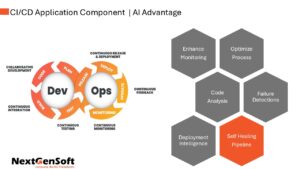
AI and ML in CI/CD: The Rise of Intelligent Pipelines
Let's dive into how AI and machine learning are changing the game for CI/CD. It's not just about automation anymore; we're talking about intelligent automation that's making software development faster, smoother, and more reliable.
 Pranav Lakhani
Architecting for Success: Essential System Design Principles for Developers
In the IT industry, it is a common yet critical mistake to dive straight into coding when starting a new project. However, this approach can lead to inefficiencies, technical debt, and costly rework down the line.
 Niraj Salot
Mastering Power BI Embedding: A Comprehensive Guide for Developers
In today's data-driven world, the ability to visualize data effectively is more critical than ever. Power BI, a powerful business analytics tool from Microsoft, allows users to create interactive and insightful reports and dashboards.
 Kushal Baldev
 Frequently Asked Questions
-
When should we split a monolith into microservices?
You split when deployments are slow, teams block each other, or scaling one feature scales everything. We identify exact service boundaries so you don’t create unnecessary services or operational debt. -
How do you decide microservice boundaries correctly?
We model services around business capabilities, not code structure. This prevents chatty services, tight coupling, and data consistency problems later. -
Where does serverless fit in microservices architecture?
Serverless works best for event-driven, bursty, or background workloads. We combine long-running microservices with serverless functions only where it actually reduces cost and complexity. -
How do you handle data consistency across microservices?
We design for eventual consistency using patterns like sagas and event streams. This avoids shared databases while keeping business workflows reliable. -
How do you control latency between multiple services?
We minimize synchronous calls, introduce async messaging, and design APIs with performance budgets. This keeps response times predictable even as services grow. -
How do you avoid Serverless vendor lock-in?
We design cloud-native but portable architectures using abstraction layers and open standards. This keeps you flexible without losing Serverless advantages.
Get in Touch!
Submit Your Inquiry
We’re ISO/IEC 27001:2022 certified, ensuring your projects are executed with globally recognized security standards.
-

INDIA
-
301/304/305 Addor Aspire-II, Nr. Jahanvee Restaurant, University to Panjarapole Road, Ahmedabad, Gujarat 380015, India
-
INQUIRE US!
 sales@nextgensoft.io
 +91 81284 66678

 sales@nextgensoft.io
 +91 81284 66678
We're Attending Odoo Experience India, 2026

-
 Brijesh Shah
CEO, NextGenSoft
Brijesh Shah
CEO, NextGenSoft
-
Vrajlal Chhuchhar
Sr. BDM, NextGenSoft