How to Find the Right AI-First Digital Engineering Company for Your Business?
Brijesh ShahApril 24, 2026
Share this article


Let AI highlight what matters.
As per the latest reports, the global AI marketplace will exceed 390 billion dollars by 2026.
Currently, almost 80% of all AI projects will fail to produce acceptable results in terms of business value, and 95% of the projects attempting generative AI will never scale up successfully via pilot projects.
This data represents a significant challenge to companies trying to convert AI-led experimentations into production-ready results, as this requires high levels of expertise.
Therefore, businesses must work with experts who view AI as an integral component of their business digital architecture rather than simply another layer to their technology stack. So, here we are to understand the details of your specific needs in order to become a long-term partner. Read on.
Over the last few years, the way we experience and engage with Artificial Intelligence has evolved rapidly. From simple chatbots and basic automations, to companies wanting now autonomous Agentic AIs that can reason, plan, and then perform, AI has become an integral part to solve complex business functions.
There are a variety of reasons that many of these efforts, both inside and outside of your corporate purview, are still failing to meet their anticipated potential. Some primary causes of failure include:
An AI-First digital engineering company addresses the concerns and actions causing major bottlenecks through embedding the AI deeper into your entire operational ecosystem from the beginning stages. This approach significantly lessens your overall risk while improving your return-on-investments and ultimately results in solutions scaling when the business requires them.
The following provides a framework that can be used to distinguish between authentic innovators and solution providers. Each of the six pillars will help you assess if the provider creates AI as an architectural system or if they have simply created AI as an additional layer to their existing systems.
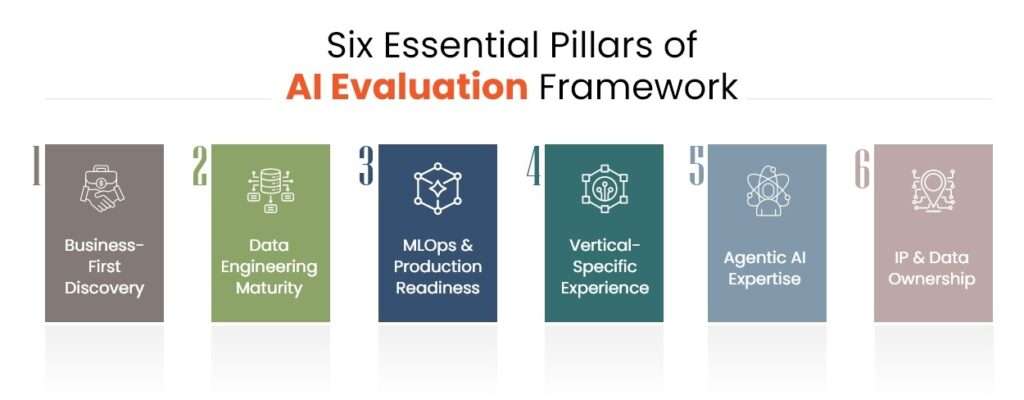
Genuine partners will start any partnership process with the business case for the engagement. This means they will consider reducing churn by 15%, which will decrease operational costs by 20%. Accordingly, they will create a technical roadmap that progresses from that standpoint. This ensures that all code and models being built and utilized have measurable business goals.
80% of AI’s success comes from the data, and the remaining 20% comes from algorithms and programming. Look for organizations that obsess about the “plumbing” of their data, filtering raw Inputs, creating robust data pipelines, enforcing data governance, and providing real-time integration of data from multiple external sources. Without sound data foundations, even the best-performing models will fail. A mature software development company will invest here before developing any training scripts.
A majority of AI implementations fail in the production phase. Ensure that you are able to get evidence of documented processes for model versioning and automated model retraining, proof of drift detection and rollback capability, and performance metrics validation of the solution. Leading organizations will typically deploy solutions on an Enterprise platform like AWS SageMaker or Azure Machine Learning to ensure they can demonstrate reliable and repeatable results at scale rather than just being able to provide a one-off demonstration.
It is important to prioritize those that have proven wins within your domain, such as those developing HIPAA-compliant healthcare models, fraud detection in the BFSI sector, supply chain optimization in manufacturing, and real-time analytics in logistics. Being fluent in your domain will dramatically reduce the amount of ramp-up time and the risk associated with compliance when bringing on a provider.
In 2026, the frontier will continue to expand, from reactive chatbots to proactive agents that are capable of reasoning, planning, and executing complex workflows entirely on their own (autonomously). Providers fluent in multi-agent orchestration, tool calling, and long-term memory systems will raise AI from being an assistant to becoming an actual digital workforce.
Do not automatically assume that you will own anything; demand that it be put in writing. You must maintain the full rights to code, model weights, custom datasets, and any derived intellectual property. Contracts with complete transparency will allow for the avoidance of vendor lock-in, as well as protect your competitive advantage.
If you apply these pillars across the board, it becomes easy to see which providers are going to deliver AI-First digital engineering services that will last long after the initial rush of excitement has faded.
A systematic approach to verifying fit should be defined for your shortlist.
An example is NextGenSoft’s utilization of live data pipelines and agentic workflows to create production-ready artifacts that the teams can “build upon” right away.
A good conversation could still conceal significant problems. Be aware of the following signs of possible trouble:
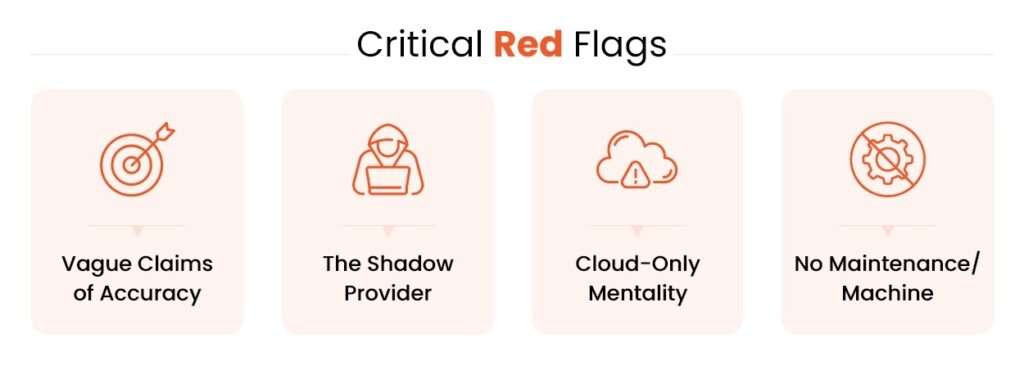
If you avoid these types of risks, you will protect both your budget and your project timeline.
NextGenSoft has been a reliable AI-first digital engineering company that understands enterprise security and compliance are crucial to every layer of your development pipeline; hence, we hold an ISO 27001 Certification, and incorporate security and compliance into every stage of the enterprise architecture process, DevSecOps pipeline, and beyond.
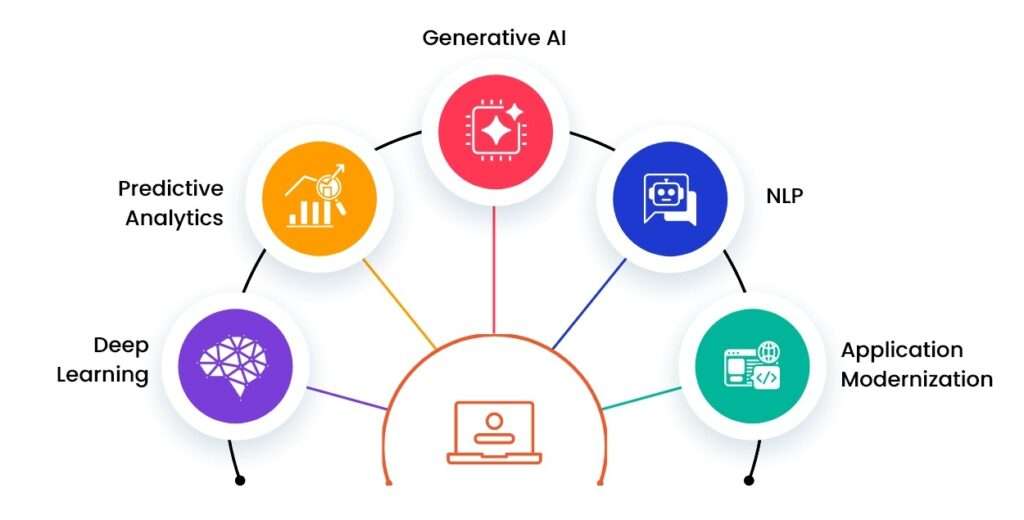
We specialize in providing AI-first digital engineering services using:
Examples of what their clients have accomplished with NextGenSoft include:
With over 50 skilled engineers and 5 principal architects, NextGenSoft offers a variety of flexible engagement models, including dedicated pods, project-based, and staff augmentation. So, you can always trust us when you are looking to hire an AI-first development company.
Our commitment to encouraging independent ownership of intellectual property will eliminate the regret that many organizations experience after the deployment of a development solution.
Choosing the correct AI partner is a strategic choice (not merely picking a supplier) that will determine how well your organization can compete in the years to come.
Being systematic in the selection process, sticking to the six-pillar framework, and avoiding red flags will put your company in an overall better position for sustainable AI success as opposed to costly experiments. Leaders such as NextGenSoft indicate that treating AI as an architectural foundation leads to transformational results.
Now is the time to start making decisions, weighing thoughtfully, doing proof-of-concept trials thoroughly, and selecting a provider aligned with your overall company goals, which will determine your future competitive advantage. Those companies that succeed in 2026 will be those that have partnered at this phase with a software development company that can create production-ready intelligence now.
1. What makes an AI-First Digital Engineering Company different from a regular software firm?
Answer: AI-First digital engineering companies incorporate intelligence directly into the core of their systems as part of their architecture rather than as add-on features. They also embed data engineering into all phases of the development lifecycle, along with MLOps and Agentic AI, to ensure that their business makes a lasting impact on the environment.
2. What is the typical duration of an AI pilot project?
Answer: Most pilots run between 4 and 8 weeks. These short-duration pilots allow sufficient time to test the system and gather feedback from team members while giving developers a chance to assess whether the solution is ready for production deployment without making a long-term commitment.
3. Why is data engineering more important than the choice of advanced AI models?
Answer: High-quality data pipelines are the foundation of any successful implementation of AI. AI models, even when fully optimized, will not produce valuable results when fed bad data. As such, mature partners spend time ensuring that raw data has been cleansed, structured, and appropriately governed before developing any type of AI model.
4. What IP Rights do I need to validate concerning code ownership and continued support?
Answer: You should always have written proof of ownership for the code (e.g., code), licensing information, and intellectual property related to the AI solution you create. You should also request a detailed post-go-live document describing how your company will monitor, retrain, and maintain your AI solution and optimize costs associated with the ongoing support of your AI technology.
 Brijesh Shah
Brijesh is an IIM Ahmedabad alumnus with 22+ years of experience in software development and management. As the visionary leader of NextGenSoft, he drives the company toward becoming a global leader in software services and digital transformation. He also serves as Vice President of the PMI Gujarat Chapter.
We’re ISO/IEC 27001:2022 certified, ensuring your projects are executed with globally recognized security standards.

INDIA
 sales@nextgensoft.io
 +91 81284 66678


