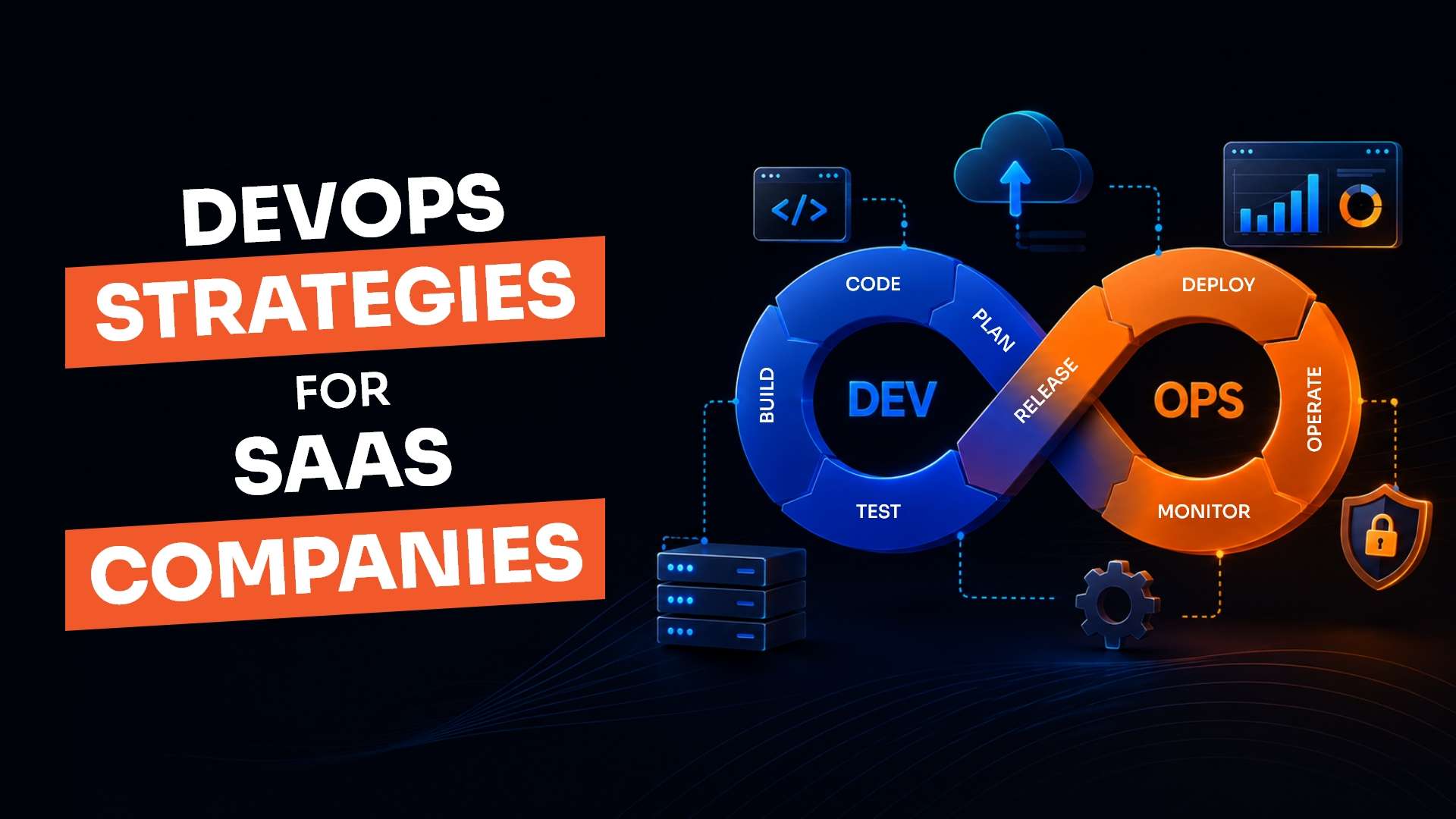
DevOps Strategies for SaaS Companies: Build, Deploy, and Scale Faster
Aman MishraJuly 17, 2026
Share this article


Let AI highlight what matters.
The competition in the SaaS space is fierce, with many organizations competing to attract and retain customers. Current industry analysis shows that the SaaS companies with the greatest financial success have developed strategies to innovate and create services that deliver faster than other companies.
In addition, these prosperous companies demonstrate faster recovery times when failures occur than their less prosperous counterparts. Therefore, for companies to succeed and grow in this environment, having effective SaaS DevOps Strategies is critical to their future survival and innovation.
Successful companies that operate as SaaS providers understand that speed, reliability, and scalability are key elements of their business models and are therefore everyday needs of their customers. By implementing DevOps Development strategies within the context of a SaaS business model, organizations are able to deliver improved products, release more product updates, have consistent uptime, and rapidly respond to customer needs.
Here in this post, we will examine critical success factors, including proven strategies, documented benefits, challenges to success, and practical best practices documented by leading SaaS companies through 2026.
Unique challenges exist for SaaS firms. Clients expect consistency in the improvement of the service, no interruptions of service, and to use the service without difficulties or any frustrating experiences.
Traditional development methods have difficulty satisfying these customers’ needs. Using DevOps automation to help improve the workflow between product development and the operational support staff will foster collaboration between the two groups, automate the process, and create an environment that facilitates continual improvements.
Through utilizing DevOps concepts and techniques effectively, a SaaS firm should be able to release new functionality more quickly, maintain a higher degree of reliability with the service, and be able to expand effectively as its client base grows.
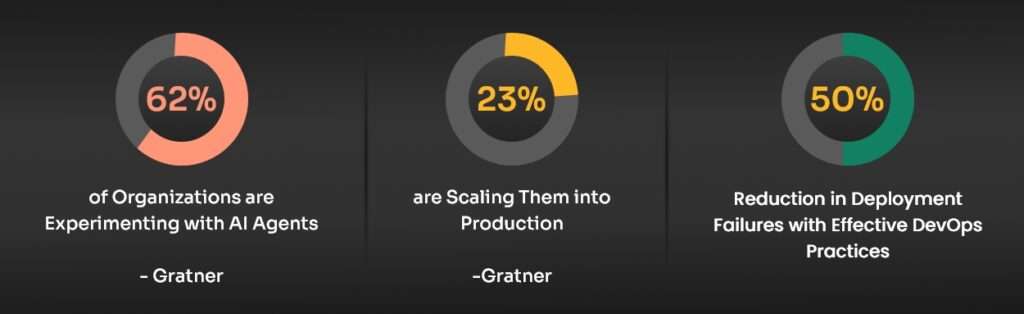
A large number of firms have stated that by using proper DevOps processes, they are able to reduce deployment failures by over fifty percent while significantly increasing the frequency of deployments.
SaaS companies that have an effective DevOps model may find they can:
Successful SaaS companies leverage DevOps to enable multiple daily code deployments with high reliability, faster release cycles, and minimal deployment failures.
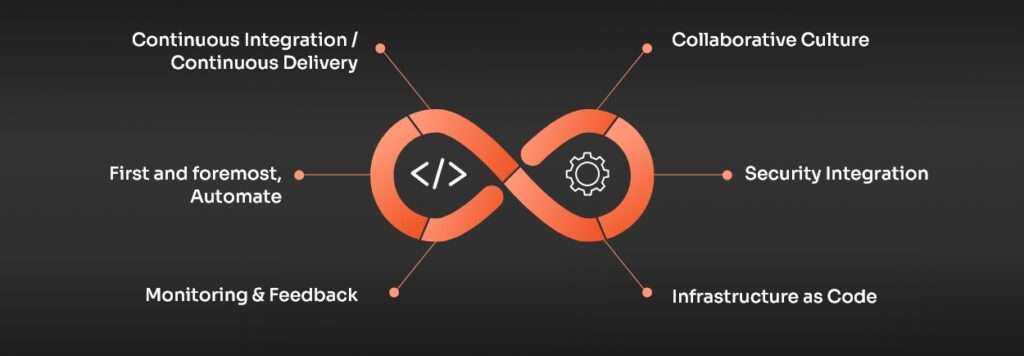
The core principles of a successful SaaS DevOps strategy consist of the following elements:
These core principles serve as the foundation of successful Cloud DevOps practices for SaaS applications.
The deployment of SaaS applications successfully requires a few fundamental elements to work together. These elements include:
1. CI/CD Pipeline for SaaS: A properly designed CI/CD pipeline for SaaS builds, tests, and deploys code changes automatically. This enables only quality code to be promoted to production.
2. Infrastructure Automation: SaaS companies today define and manage environments as code, which allows them to create consistent infrastructure. This approach reduces the time it takes to provision infrastructure and prevents configuration mistakes.
3. Monitoring and Observability: Continuous monitoring of your applications will help you identify problems before your customers do. Observability is an important part of providing teams with insight into how the application is performing and how users are interacting with it.
4. Automated Testing: Comprehensive automated testing throughout the development lifecycle will catch problems early and maintain high quality.
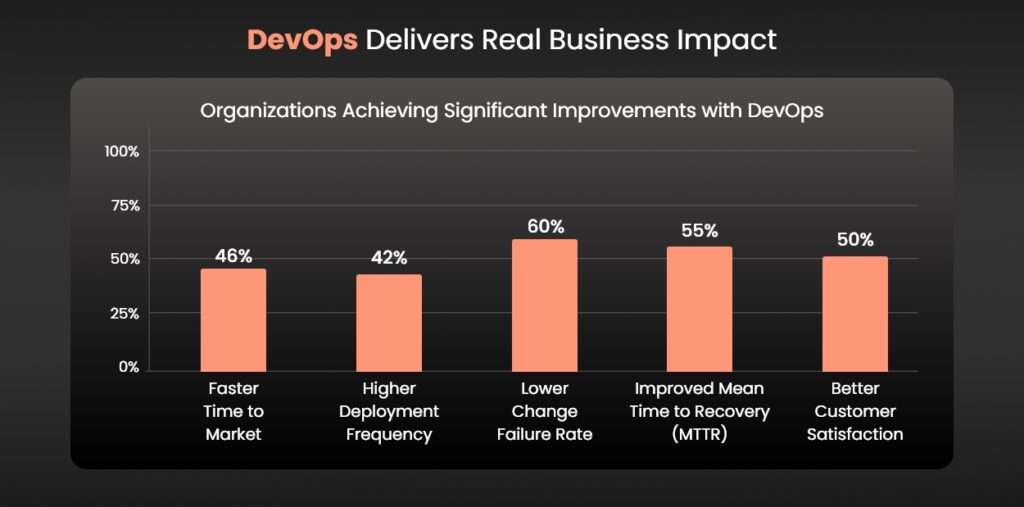
The best-in-class SaaS companies have implemented the following proven best practices:
DevOps automation for SaaS can be challenging, and below are some common challenges:
Organizations that work through the challenges above will generally experience much more success with their DevOps efforts than those that do not.
Read Also: Migrating Azure DevOps Server to Azure DevOps Services: A Step-by-Step Guide
NextGenSoft is an AWS Select Tier Services Partner and ISO/IEC 27001:2022 certified organization, bringing enterprise-grade security and cloud expertise to every DevOps engagement. It delivers industry-leading DevOps development services that help businesses accelerate software delivery and improve operational efficiency. We specialize in using DevOps strategies to support SaaS Organizations. Our DevOps Development Services are performed specifically for each individual customer’s unique needs.
Through NextGenSoft’s extensive experience in creating fully automated CI/CD Pipelines for SaaS, implementing Cloud DevOps practices, and providing dependable deployment solutions for SaaS applications, our clients have been able to achieve improved results – delivering real-world outcomes, empowering their teams, and growing sustainably.
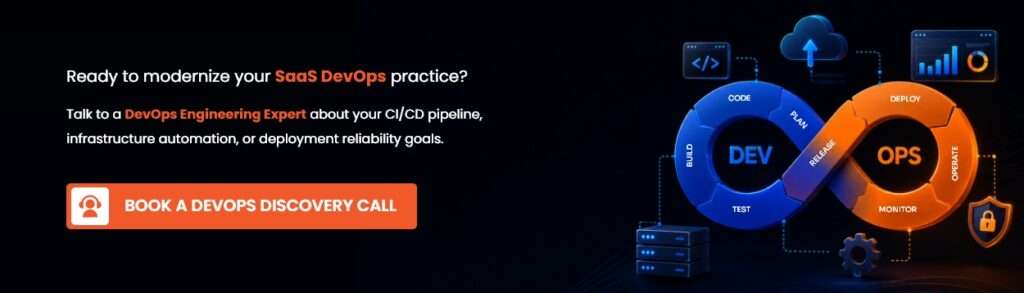
So, in the hyper-competitive business environment we find ourselves in today, all organizations building, deploying, and scaling SaaS must have a well-defined strategy for utilizing DevOps. By implementing modern methodologies, leveraging automation, and utilizing the right tools, DevOps Development Company can drastically increase their speed of development while providing higher-quality products and increased customer satisfaction.
This is not a simple journey to take; rather, it takes dedication, proper planning, and proper experience. Organizations investing in true DevOps implementation within SaaS will set themselves up for ongoing success and innovation.
NextGenSoft continues to partner with SaaS Organizations by providing expert DevOps implementation services and practical guidance for utilizing modern DevOps strategies.
If you would like to learn how DevOps will enable your organization to quickly and efficiently grow, please contact NextGenSoft today to schedule a free consultation.
1. What is the best DevOps strategy for SaaS companies?
Answer: The ideal SaaS DevOps strategy concentrates heavily on automation, continual smaller incremental releases, stronger monitoring, and stronger collaborative team actions – establishing key best practices to build on when your team has confidence in them.
2. How does the CI/CD pipeline for SaaS improve development?
Answer: A modern SaaS CI/CD pipeline provides automated testing and deployment of code changes. This enhances development by producing lower error rates, faster release cycles, and allowing teams to offer new features to customers with more speed than previously thought possible.
3. What are the main benefits of Cloud DevOps practices?
Answer: The benefits that Cloud DevOps Practices provide are increased deployment speeds, self-scaling applications, reduced costs, increased reliability, and effortless ongoing application maintenance with the capability to quickly respond to customer demands.
4. How can NextGenSoft help with DevOps implementation?
Answer: NextGenSoft is a leading DevOps development company. It is a trusted partner to SaaS organizations developing and implementing modern DevOps practices with tailored optimization that supports the individual requirements of each organization.
5. How long does it take to see results from DevOps implementation for SaaS?
Answer: SaaS companies generally see measurable results around 4 to 8 weeks post-DevOps Implementation (for SaaS), with full benefits (faster deployments, better reliability) becoming apparent at approximately 3 to 6 months, based on the size of the development team and their processes before the implementation.
6. What are the most prominent DevOps tools utilized for software development in the SaaS Space?
Answer: The most widely used DevOps tools for SaaS development include Continuous Integration/Continuous Delivery (CI/CD) platforms, Container Technology, Monitoring Tools, and Infrastructure as code (IaC) tools, among others. The correct tool for your software development team will depend on both the skill set of your team members and the specifications/requirements of your software. An Expert Development Company can assist you in determining what tools will best suit your needs and guide you to successfully implement that solution.
 Aman Mishra
Aman Mishra, a DevOps Engineer with over 8+ years of experience, specializes in AWS, Azure, Kubernetes, CI/CD pipelines, and more. Passionate about learning new technologies, he continuously explore cloud innovations and automation to drive efficiency and scalability.
We’re ISO/IEC 27001:2022 certified, ensuring your projects are executed with globally recognized security standards.

INDIA
 sales@nextgensoft.io
 +91 81284 66678

 Brijesh Shah
CEO, NextGenSoft
Brijesh Shah
CEO, NextGenSoft
 Vrajlal Chhuchhar
Sr. BDM, NextGenSoft
Vrajlal Chhuchhar
Sr. BDM, NextGenSoft


