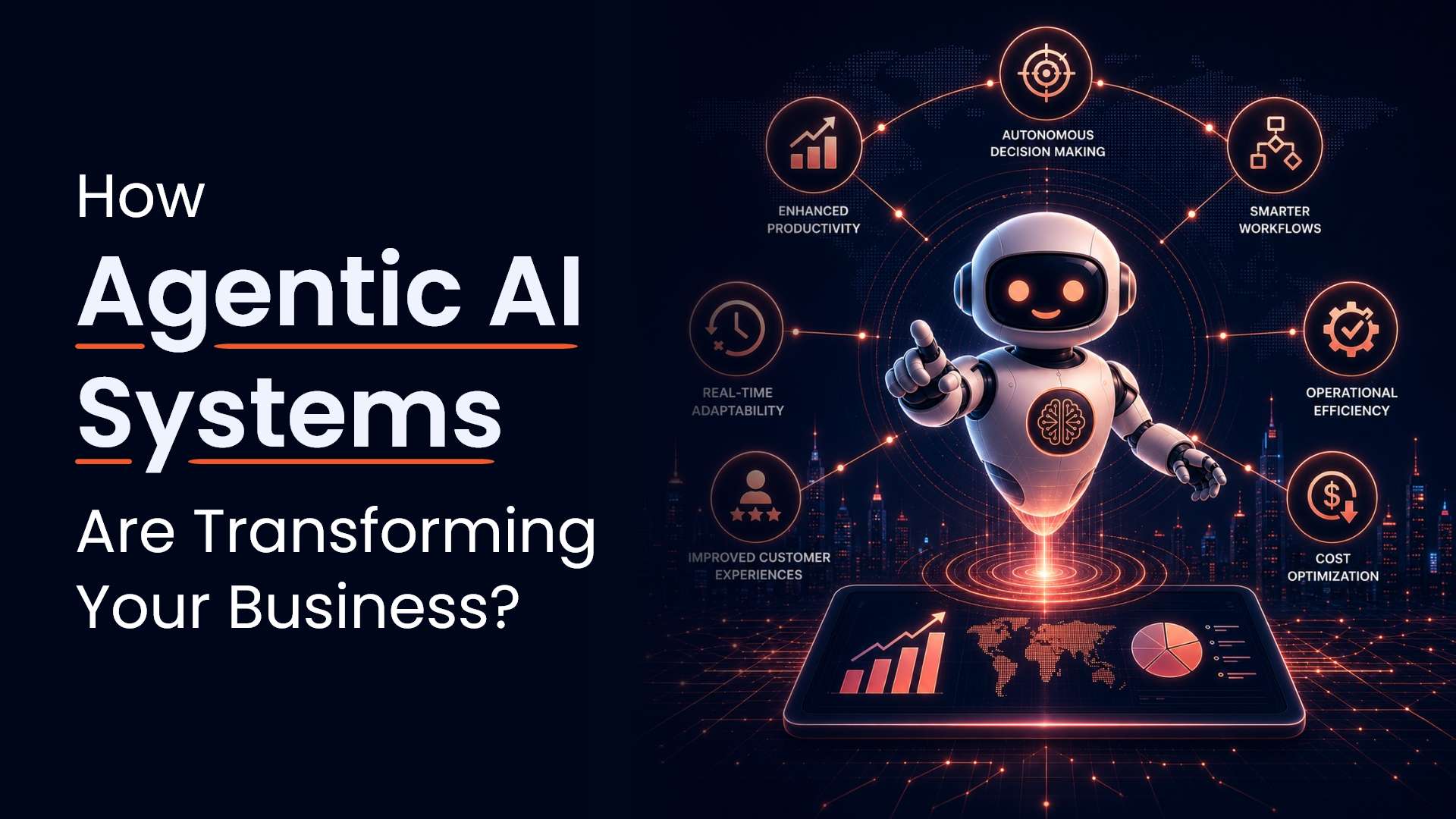
Agentic AI Systems: Types, Architecture & Enterprise Use Cases
Pranav LakhaniMay 22, 2026
Share this article


Let AI highlight what matters.
Today’s businesses are looking for more sophisticated ways to automate processes requiring multiple complex steps. An Agentic AI system can provide just such functionality. An Agentic AI system not only functions as a chatbot or performs basic automated tasks, but also enables AI to obtain and understand data about its environment and surroundings.
Think logically about the possible outcomes related to that information, develop an action plan, and perform an action with very little, if any, help from humans.
Here, we are going to assess the characteristics of Agentic AI systems, the way they work, the different types of Agentic AI systems and information technology architectures for Agentic AIs, and the various ways in which Agentic AIs can be used by enterprise organizations.
Agentic AI systems are advanced and intelligent, whereby agents work in an autonomous way and make decisions, determining how to achieve their goals. Unlike more traditional AI systems, which only respond when instructed directly, Agentic AI systems take charge and develop a series of smaller steps required to accomplish a larger objective. This allows them to work towards an outcome on their own without further guidance. So, it provides enterprise organizations with the agility needed to address rapidly evolving, often unpredictable, challenges.
Agentic AI systems represent AI systems that are constantly focused on actions and results. It observes the world around them and continuously analyzes the best course of action, developing and executing plans of action, assessing their results against predetermined criteria to determine success or failure. It uses that information to improve their actions in the future. By maintaining this cycle, Agentic AI systems can now manage projects or processes that once required continuous human intervention.
NextGenSoft, being the most reliable Agentic AI development company, specializes in creating agentic AI systems. Our developing solutions meet, support, and align with the needs of organizations, as well as ensuring that it has adequate security and controls built into them. It allows for the successful application of the agency business model.
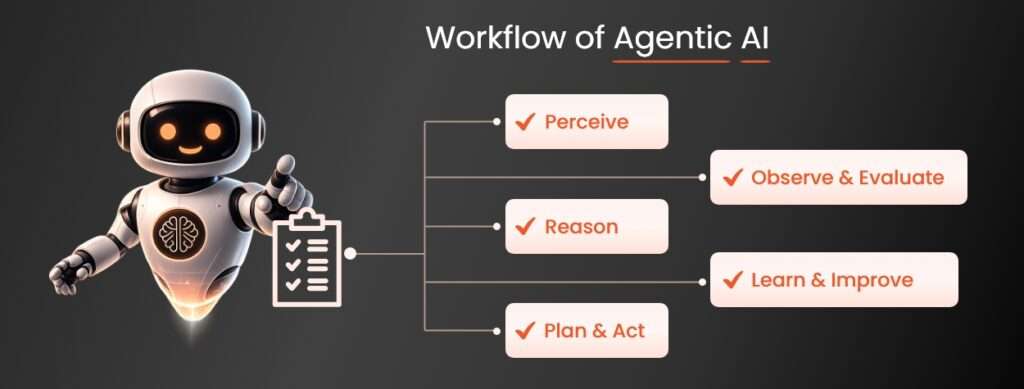
This cycle of thinking, acting, and observing enables reliable autonomous behaviour.
The main advantage of this process is that it can adapt to changes in circumstances without needing additional instructions, which is particularly beneficial in rapidly changing business environments.
Enterprises employ several types of agents to accommodate various requirements of their respective businesses.
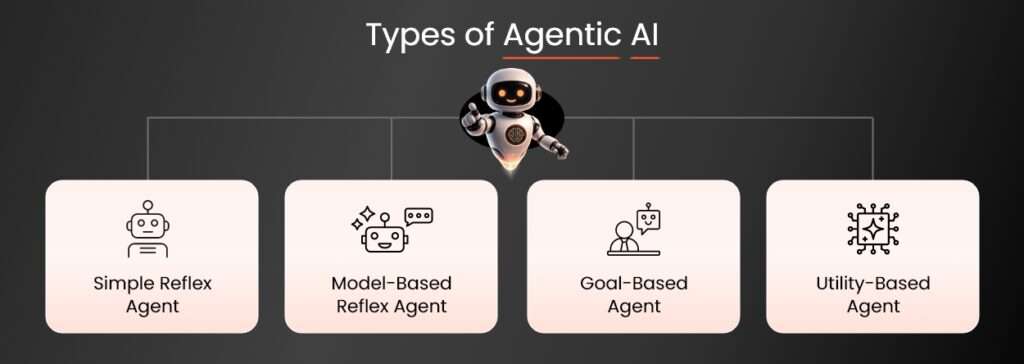
There are four major categories of agents:
It carries out actions based on its current input, using predetermined rules, making it suitable for small and simple operations requiring immediate action, such as responding to card transactions.
It maintains a model of its environment that allows decision making based on both present inputs and previous conditions. Therefore, it is suitable for a variety of applications that require more complex analyses than a simple reflex agent can provide.
It is an agent that plans based on its goals and therefore is best suited to manage and effect change in complex workflows. It executes actions that help achieve its goal, regardless of the specific methods required for achieving that goal.
It is capable of making predictions based on the total value of the actions it may take. Therefore, is best used in an instance where a high degree of uncertainty exists in the potential outcome of an intended action.
NextGenSoft can help clients select the appropriate type of agent based on their unique operational needs and objectives. We offer AI agent development services that will lead to solutions that are optimally aligned with those client goals and operational realities.
The way an agent can perform will completely rely on the architecture of that agent. Architectures exist in multiple varieties, and they provide agents with different strengths.
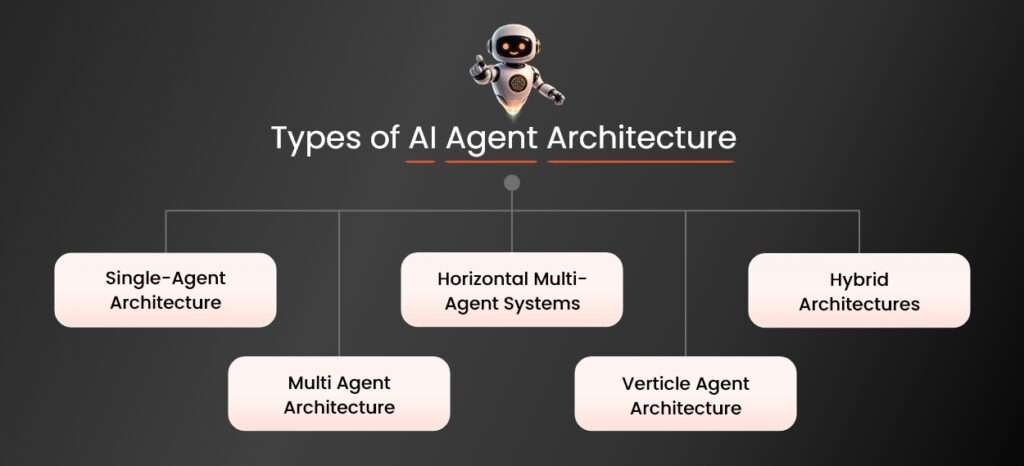
As a premier AI-first digital engineering company, NextGenSoft develops quality architectures that will scale reliably.
Agentic AI provides real-world benefits to businesses in many different types of industries with implementable use cases.
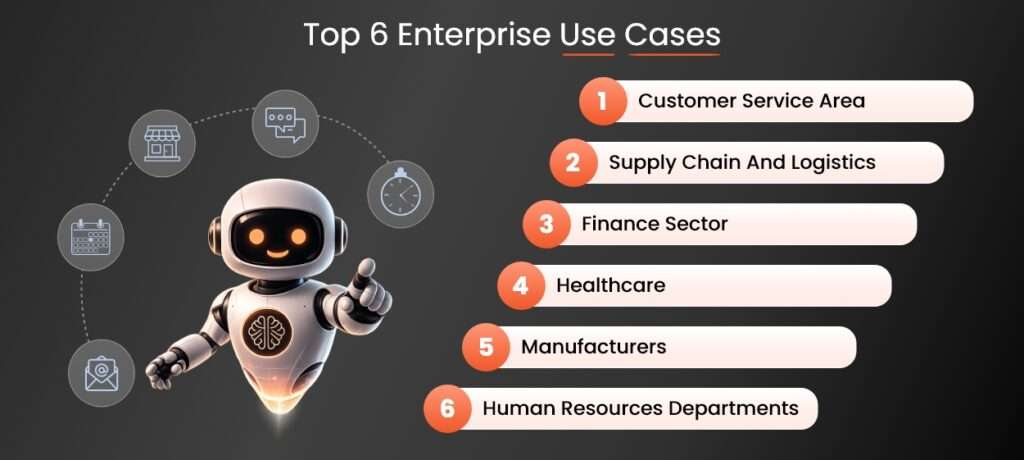
Agents handle customer inquiries and resolve issues, while managing escalations to human representatives as necessary. Agents store a customer’s history to provide scalable, personalized service.
Agentic AI automates suppliers to track inventory, predict when there will be disruptions in the supply chain, create optimal routes, and automatically coordinate with suppliers. This automation typically reduces the time it takes to complete orders and improves overall efficiency.
Agentic solutions support businesses in detecting fraud, monitoring compliance, assessing risk, and providing personalized financial advice. They achieve this by analyzing enormous amounts of data at high speeds while keeping the processed data accurate.
Medical organizations use agents for administrative duties, patient monitoring, scheduling appointments, and assisting in patient diagnosis. This allows healthcare providers to devote more time to providing care for their patients.
They utilize agents for predictive maintenance, quality control, and optimizing production. The agentic systems are constantly analyzing the data from the equipment in the factory to prevent equipment breakdowns.
They utilize intelligent agents to streamline recruiting, onboarding, employee support, and training coordination. Marketing departments use agents to create content, personalize campaigns, and analyze consumer behaviour.
NextGenSoft has proven to have a lot of implemented solutions similar to those listed above. Through our enterprise generative AI services and enterprise AI workflow automation services, they have successfully automated many of their clients’ complex processes.
NextGenSoft uses autonomous AI agent examples in their application projects, where they use natural language commands to govern the workflow of the applications.
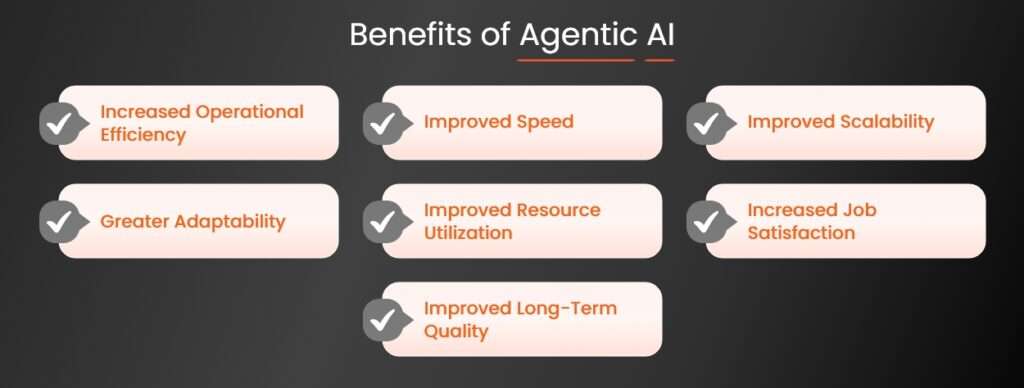
Organizations that have implemented agentic AI experience many benefits, including:
If implementing agentic AI is done in a thoughtful manner, organizations will see agentic AI as a reliable partner that improves the capabilities of employees.
NextGenSoft brings together architectural knowledge, practical experience in development, and an emphasis on the client experience into a single enterprise AI solution. We also serve as an agency-based developer for other enterprises that wish to create agents for business purposes. We provides end-to-end development support for all types of AI agents, depending on the type of business context.
The Enterprise AI solutions provider offers responsible implementation, including proper security, transparency, and human oversight. Using their AI workflow automation and enterprise-level generative AI services, clients can achieve measurable outcomes while still mitigating risk to the business.
Additionally, NextGenSoft provides flexible engagement models that allow businesses access to a high degree of technical expertise and a long-term commitment to successful outcomes. As a result, solutions will remain maintainable, scalable, and aligned with the goals of the organization.
The movement towards agentic AI will ultimately lead to the most significant development of artificial intelligence as we know it today. These agentic systems integrate all of the basic functions and processes of AI: perception, reasoning, planning, and action.
To make informed decisions regarding the implementation of agentic systems, individuals will need a sufficient understanding of various agent types, agent architectures, and examples of their application in the real world. By implementing agentically developed AI, an enterprise has the ability to create efficiencies, drive innovations, and establish competitive advantages in its respective industry.
NextGenSoft has developed a team of experts who can guide businesses that wish to move forward with developing agentically empowered digital performance management strategies. Consult now!
1. What are agentic AI systems?
Answer: Agentic AI systems are autonomous in that agents are able to perceive their environment, reason about goals, and plan what they want to do, execute the plans, and learn from the results with minimal ongoing human input.
2. What are the general types of AI agents found in enterprises?
Answer: There are various types of agents used within most enterprises; each type has specific functions and applications. Common examples include simple reflex (respond instantly), goal-based (plan), utility-based (optimize outcome) and learning agents (learn from experience).
3. How do agents who function together use a multi-agent AI architecture model to provide greater benefit to an enterprise?
Answer: Multi-agent architectures allow different types of agents with expertise in their specific functions to work collaboratively to complete multi-step activities. As a result, when using a multi-agent model compared with the use of a single agent, the enterprise has improved scalability, resiliency and efficiency.
4. What are some practical examples of enterprise use cases using agentic AI?
Answer: Many different enterprise applications can be classified as agentic AI. Among the most widely recognized examples are intelligent customer support, optimization of the supply chain, financial risk management, healthcare administration, IT operations automation and personal marketing.
 Pranav Lakhani
Pranav brings over 20 years of expertise in software development and design, specializing in delivering enterprise-scale products. His unique ability to manage the entire product lifecycle ensures innovation and technical excellence across every project.
We’re ISO/IEC 27001:2022 certified, ensuring your projects are executed with globally recognized security standards.

INDIA
 sales@nextgensoft.io
 +91 81284 66678


