If your application feels hard to change, slow to scale, or risky to touch, the problem usually isn’t the business; it’s the way the software was built years ago. Our Application Modernization Company focuses on fixing that foundation, so your team can move faster without things breaking.
We first start by understanding what you already have, how it’s being used, and where it breaks. Then we redesign your architecture, clean up your legacy code, and add DevOps and automation. If it’s not necessary, we don’t push rewrite and tech also.
What you get is an application that’s easier to work on, cheaper to run, and ready to grow with your business. With our Legacy App Modernization Services, your software stops being something you work around and starts working for you.
Most older applications aren’t “bad”; they’re just hard to change. Application Modernization Services restructure the code, architecture, and dependencies so your team can understand, modify, and extend the application without fear.
Legacy applications usually lack proper separation, testing hooks, or deployment flow. Through Application Modernization Services, we redesign the application structure and introduce controlled deployments so updates don’t turn into rollback exercises.
Instead of throwing the application away, Legacy app Modernization Services focus on refactoring critical paths, improving data access, and optimizing architecture where it matters most.
Older applications are tightly coupled to servers and environments. Application Modernization Services decouple the application so it can run reliably in the cloud, containers, and CI/CD pipelines.
Legacy applications often block analytics, automation, and AI use cases. After Legacy app Modernization Services, your application can expose clean data, APIs, and workflows that support AI and data-driven features.
Maintenance and support of legacy frameworks demand considerable assets. As time passes, hardware and software become outdated, and costs increment, pressing IT budgets more tightly.
Obsolete systems cannot manage growing client requests or data loads, resulting in drowsy execution, benefit interruptions, and unsuitable client experiences.
Many older applications were not designed with sufficient security measures to help combat today’s cyber threats, leaving businesses vulnerable to potential data breaches and compliance issues.
Legacy systems are frequently not compatible with modern tools and technologies, hindering businesses from implementing AI, machine learning, or cloud-based solutions.
Now, businesses depending on obsolete systems risk becoming irrelevant, losing customers, and ultimately giving up their market share as competitors launch innovative, feature-ready solutions.
We map every application component to real business usage—revenue flow, user load, and operational dependency. This ensures we modernize what actually affects performance, scalability, and cost, not what just looks outdated.
If your architecture can’t scale, new features will only increase instability. We remove tight coupling, improve service boundaries, and restructure data flow first, so future development becomes predictable instead of risky.
Rewrites are expensive and risky. We carefully refactor critical modules, isolate legacy code, and modernize in layers. This keeps your application running while steadily improving performance and maintainability.
We analyze traffic patterns, peak usage, and failure points. Every decision, caching, APIs, databases, scaling- is made to handle real production stress, not theoretical capacity.
Modernization fails without clean delivery pipelines. We implement CI/CD, environment parity, and rollback strategies so releases become routine, not events that require downtime or emergency fixes.
We document decisions, simplify code structure, and align with your team’s skill set. The result is an application your team can confidently maintain, extend, and scale without depending on us forever.
Modernization now starts with clarity. AI helps identify which parts of your application are causing performance, scaling, or maintenance issues, so effort goes where it creates real impact.
Instead of risky full rewrites, applications are modernized step by step. This keeps systems stable while improvements roll out without disrupting users or operations.
Modernize your app by building around APIs. Due to this, your app can easily be integrated with AI tools, future products, and partners, without touching your core logic. Make your app flexible over the years.
Code modernization works only when delivery is modern too. CI/CD, automation, and standardized environments are now built into modernization from day one.
Partner with NextGenSoft, a global digital transformation company, and leverage our multi-cloud engineers’ abilities. As a trusted IT solutions provider, we build up secure inter-cloud networks, map native cloud services, and make vendor-agnostic methodologies to maximize esteem and minimize dangers.
We rethink conveyance fabulousness with optimized program lifecycles. From advancement to arrangement, our digital transformation services and solutions focus on dependable, high-quality discharges that enhance client satisfaction.
NextGenSoft’s adaptable contracting models give access to talented IT service providers custom-fitted to your needs. Scale easily with agile assets for DevOps, guaranteeing consistent collaboration and venture victory.
Our commitment to straightforwardness builds belief and cultivates cooperation. As a leading digital transformation company in India, we guarantee adjusted objectives, open communication, and compelling collaboration for shared success. reach out and Contact Us to learn more.
In-depth system assessments to identify inefficiencies, bottlenecks, and security risks. Build a hardware, software, and infrastructure inventory to ensure modernization priorities are business-focused.
Define explicit modernization objectives, improved performance, lower costs, and/or better scalability. Review and maintain all architecture compliance to industry standards and coordinate with stakeholders to address any technical and operational requirements.
The database modernization strategy should be developed with a focus on high-impact areas. Picking between options of rehosting/refactoring/re-platforming/replacing based on business objectives and quick-win opportunities.
All of these can use technologies such as cloud platforms and AI and DevOps tools to scale and be more efficient. Update cyber-security procedures to protect systems from evolving threats.
Hot-backup critical data and test migration processes to validate and reduce disruptions. Incremental rollouts and data integrity checks are critical for application modernization companies to ensure smooth migration and establish modern environments.
Monitor metrics such as cost savings and client fulfillment to gauge the victory of modernization. Collecting criticism and emphasizing on systems to stay ahead of the game.
Browse through the technical knowledge about latest trends and technologies our experienced team would like to share with you.
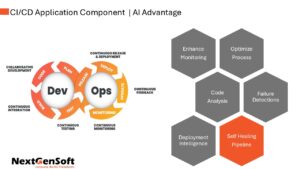
View all articles!Let's dive into how AI and machine learning are changing the game for CI/CD. It's not just about automation anymore; we're talking about intelligent automation that's making software development faster, smoother, and more reliable.
In the IT industry, it is a common yet critical mistake to dive straight into coding when starting a new project. However, this approach can lead to inefficiencies, technical debt, and costly rework down the line.
In today's data-driven world, the ability to visualize data effectively is more critical than ever. Power BI, a powerful business analytics tool from Microsoft, allows users to create interactive and insightful reports and dashboards.