AI Agent Architecture Company
Our AI agent architecture development services builds agents that observe events, decide next steps, and execute actions automatically.
 Get in Touch!
Introducing AI Agents That Remove Daily Interventions
Most software still waits for people to step in, check alerts, decide what to do, and trigger actions. Our AI agent development company is about fixing that. We build agents that watch what’s happening inside your systems, make decisions based on real conditions, and act automatically. No constant approvals. No manual follow-ups.
We work closely with your team to identify where human effort is being wasted, such as through daily interventions, repetitive decisions, or fragile automation. Then we design AI agents that quietly handle those parts, so your systems run smoother and your team can focus on higher-value work. Whether you need full AI agent development services or just a starting point, we guide you through the entire process.

Benefits of AI Agent Architecture

Enhanced Automation
They can perform repetitive and complex processes without any human intervention. This leads to increased efficiency, accuracy, and speed in workflows, allowing businesses to concentrate on strategic priorities.
Scalability and Flexibility
It provides built-in ghosting features; AI agent architecture easily blends into cloud architecture and microservices or use cases, making it easier for businesses to scale based on demand; AI agent frameworks allow to add or remove functionalities easily as per requirement.
Improved Decision-Making
AI agents process critical volumes of information in real time delivering actionable insights. This enables organizations to make data-driven decisions, leading to better performance and reduced risk.
Cost Efficiency
The AI agent architecture can reduce costs for the business by preparing tasks and optimizing the same. Cloud solutions also reduce costs, such as a pay-as-you-go model.
Personalized User Experiences
Improve your consumer’s interface and behavior while keeping them engaged with the utilization of customized machine learning, this is essential for industries like healthcare, customer service, e-commerce, etc. by AI agent solutions.
Faster Time-to-Market
In reality, AI representational plan incorporates unusual components and systems for the simplifications that give an advantage in quickening cycles of development, empowering endeavors to execute more clever solutions more rapidly and gain a competitive edge.
Challenges Without AI Agent Architecture
Inefficient Automation
Without a clear architecture, AI agents result in a scattered and inconsistent approach. It leads to low automation and high manual efforts leading to work redundancy.
Scalability Issues
During peak times, AI-related features are often difficult to scale within traditional systems, leading to degraded performance or even downtime. This causes performance bottlenecks and bad user-ratings.
High Development and Maintenance Costs
Creating AI agent solutions in a non-architected way comes about in duplicate endeavors and expanded upkeep costs due to the nonappearance of standardization.
Inconsistent Data Handling
Systems cannot handle and handle massive volumes of Information without AI agent architecture. This hampers decision-making and diminishes the esteem determined by AI.
Limited Integration with Modern Technologies
Application modernization may not find itself well-coupled or adjusted with conventional systems, and including sets such as cloud-based deployment can be a challenge, preventing development.
Best Practices to Be Followed in AI Agent Architecture
Adopt Modular Design with Microservices
Microservices can work as modular components of AI functionalities. This allows each feature to scale, be flexible, and to be developed and deployed independently.
Leverage Cloud-Based Solutions
Better performance hyper-scale, high availability, and cost efficiency using cloud architecture to deploy AI agents Cloud platforms also abstract the management, scaling, and provisioning of infrastructure for AI workloads.
Prioritize Data Security and Privacy
When dealing with client’s data, it becomes a foremost duty to comply, ensure, and establish stringent AI data security, this includes upgrading systems security measures and access to control data securely.
Implement Continuous Learning Mechanisms
Implement a machine learning pipeline to allow AI agents to continue learning as more data is provided. This allows the agents to maintain their level of proficiency and evolve with time.
Optimize for Real-Time Processing
Architect AI agents that would deal with real-time inputs and provide immediate outputs to perform well in real-world dynamic scenarios such as interaction with customers.
Focus on Interoperability
Make sure the architecture is planned for smooth integration with existing frameworks, APIs, and extra AI arrangements. This empowers the foremost beneficial use of AI agents overall levels of trade functions.
Use DevOps and CI/CD Practices
Minimize errors, guarantee uniform and accurate operations, upgrade workflows with regular updates, and more with the utilization of CI/CD pipelines that assist in automizing testing, development, quality checks, and deployment workflows.
Monitor and Evaluate Performance Regularly
Use analytics and monitoring tools, to track down the daily performances of AI agents. By regular evaluation of the performance, businesses can enable themselves to optimize algorithms, assess accuracy, and spot possible bottlenecks.
Why NextGenSoft?
End-to-End Expertise
Tackle our mastery in microservices architecture and serverless architecture services to build secure, versatile solutions. Our team plans vendor-agnostic strategies to maximize value while minimizing risk.
Delivery Excellence
Optimize your software delivery lifecycle with microservices vs. serverless architecture solutions. Achieve quicker, high-quality deployments, upgrading reliability and meeting client demands successfully.
Flexible Hiring Model
Scale your team easily with our versatile enlisting models for microservices architecture development. Access skilled experts tailored to your particular needs and project requirements.
Transparent Actions
Foster belief and alignment through open communication. NextGenSoft’s microservices consulting services ensure clarity at every step, from planning to execution, promoting consistent collaboration.
Blogs
Browse through the technical knowledge about latest trends and technologies our experienced team would like to share with you.
View all articles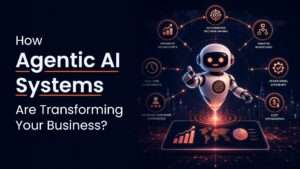
Agentic AI Systems: Types, Architecture & Enterprise Use Cases
Today’s businesses are looking for more sophisticated ways to automate processes requiring multiple complex steps. An Agentic AI system can provide just such functionality. An Agentic AI system not only functions as a chatbot or performs basic automated tasks, but also enables AI to obtain and understand data about its environment and surroundings. Think logically […]
 Pranav Lakhani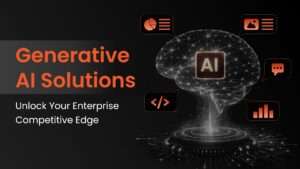
How Generative AI Solutions Give Modern Enterprises a Real Competitive Advantage?
Today, companies are experiencing increasing competitive pressures to operate faster with lower costs. This is where Generative AI solutions provide the competitive advantage required. As a result, these Generative AI Solutions represent advanced systems that can create new content, code, designs, and insights from basic prompts. They are not simply automated systems; they are true […]
 Niraj Salot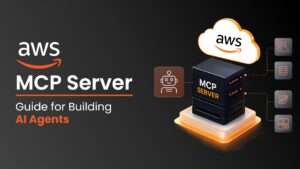
AWS MCP Server: Complete Guide for Building AI Agents on AWS
Companies are seeking ways to create intelligent AI agents that can communicate with cloud resources in a safe and efficient manner. With the AWS MCP Server, organizations can create AI agents that connect to AWS and quickly and securely access information. The purpose of this document is to explain the AWS MCP Server, how it […]
Pranav Lakhani Frequently Asked Questions
-
What is AI Agent Development?
AI agent development involves designing and deploying intelligent agents capable of perceiving, analyzing, and making autonomous decisions. AI agent development services create adaptive solutions for automation, customer interactions, and complex problem-solving. -
How do AI Agents interact with their environment?
AI agents use AI agent architecture to perceive data, process information, and take actions based on predefined rules or learning algorithms, enabling them to respond dynamically to real-world changes. -
What are examples of AI Agents?
Examples incorporate chatbots, virtual assistants, independent robots, recommendation systems, and self-driving cars, all developed utilizing advanced AI agent solutions to improve automation and proficiency. -
What is AI Agent Architecture?
AI agent architecture defines the structural framework of an AI agent, including perception, reasoning, and action layers, ensuring efficient decision-making and adaptability in various environments. -
What are the key types of AI Agent Architectures?
Key types include reactive, deliberative, hybrid, and learning-based architectures, each designed for different levels of autonomy, efficiency, and adaptability in AI agents development. -
What is the difference between reactive and deliberative agents?
Reactive agents respond instantly to stimuli without memory, while deliberative agents use reasoning, AI agent architecture, and stored knowledge to make informed decisions. -
What are multi-agent systems?
Multi-agent systems consist of different AI agents working together, frequently leveraging AI agent development services to upgrade collaboration, communication, and problem-solving in dynamic situations. -
What happens when AI agents give wrong outputs?
We design feedback loops, validation checks, and fallback logic to catch errors early. Every agent includes traceability, so you know why a decision was made and can improve it over time instead of guessing. -
Why is AI Agent Architecture important?
A well-structured agent architecture in AI guarantees ideal execution, versatility, and adaptability, empowering AI agents to handle complex assignments productively and improve automation.
Get in Touch!
Submit Your Inquiry
We’re ISO/IEC 27001:2022 certified, ensuring your projects are executed with globally recognized security standards.
-

INDIA
-
301/304/305 Addor Aspire-II, Nr. Jahanvee Restaurant, University to Panjarapole Road, Ahmedabad, Gujarat 380015, India
-
INQUIRE US!
 sales@nextgensoft.io
 +91 81284 66678

 sales@nextgensoft.io
 +91 81284 66678
UK & Ireland GBIE

-
 Brijesh Shah
CEO, NextGenSoft
Brijesh Shah
CEO, NextGenSoft