Data Analytics Consulting Services: What They Actually Do and Cost
Prince PatelOctober 6, 2026
Share this article


Let AI highlight what matters.
Data analytics consulting services assist companies in converting unorganized data into reliable reports so that decisions and analyses can be made. The engagement may include processes such as data analysis, technological systems integration that can help create dashboards, forecasting, and continuous assistance. The cost depends on the complexity of the project, quality of the available data, data science requirements, and the chosen delivery model.
Imagine yourself in a similar situation: sales reports show an increase in sales, while finance reports demonstrate a drop in profit margins. Both teams have numbers available, but they are unable to determine the problem without checking a pile of spreadsheets.
Consultants analyze what data both departments used to calculate the results and bring it together to provide similar answers to the crucial business question.
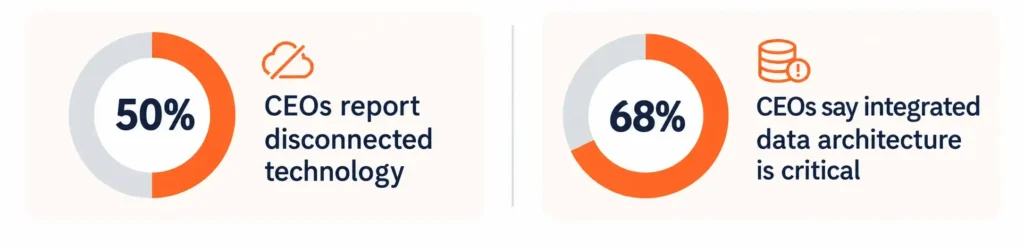
The necessity of proper reporting is not the only need one may have. A case study conducted by IBM in 2025 involving 2000 CEOs across 33 countries and 24 industries has shown that 50% of CEOs are still struggling with disconnected IT systems despite making investments in the necessary technologies.
As one may see, understanding what one is going to get as a result of his/her engagement can lead to choosing a proper service.
The simplest way to understand data analytics essentially means examining the data to determine useful patterns and assist in making decisions.
Consulting is what provides the practical aspects of making this analysis work. It fits the business question into the right data, the right computations, and the necessary action to be taken.
For instance, in the case of a store that wants to know why a popular item generates little profit, the analysis might take into account the sales figures, redemption rate, returns, delivery fees, and purchase costs. The revenue report, in this case, will miss most of the important information.
Data analytics services may involve reporting, studying, forecasting, and giving recommendations. The scope of services must provide a clear description of the things that are needed for the business and the things that will be delivered by the partner.
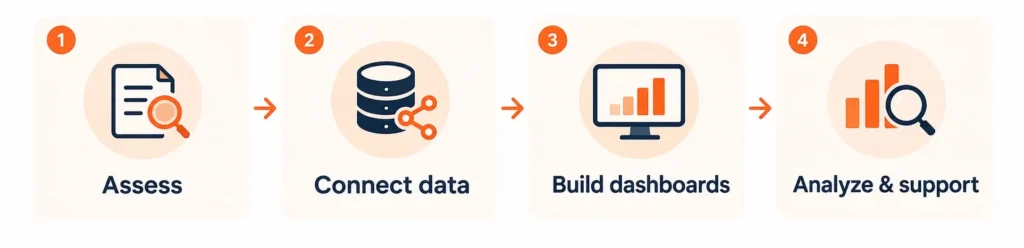
The engagement usually proceeds from defining the problem to developing an effective method of addressing the problem.
The first step is reviewing your business goals and current information.
Consultants examine where records live, who maintains them, and which problems affect their accuracy. They also speak with the people who use reports.
Typical outputs include:
Suppose sales counts every booked order as revenue, while finance counts only completed deliveries. The assessment should identify that difference before dashboard development begins.
Data strategy consulting helps decide which questions deserve attention first and who should own the resulting information.
Data architecture is the plan for collecting, storing, connecting, and accessing information.
A consultant may connect your customer system, accounting software, and operational database. Automated processes can then move and prepare records for analysis.
This work matters because separate systems often use different names, formats, and identifiers for the same customer.
In IBM’s 2025 CEO study, 68% of respondents identified an integrated enterprise-wide data architecture as critical for collaboration across functions.
The appropriate design depends on your needs. Daily management reports may need scheduled updates. Operational alerts may require information sooner.
Big data consulting becomes relevant when the volume, speed, or variety of information requires more substantial processing infrastructure.
Dashboards bring selected measures into a view people can understand and use.
The work includes defining calculations, checking results against source records, controlling access, and training users.
A sales manager might need:
A useful dashboard also explains when information was refreshed and what each measure includes.
Before approval, teams should test totals, filters, permissions, and unusual cases. A polished chart can still display an incorrect calculation.
Once reporting works, consultants can investigate changes and help teams evaluate possible actions.
They might examine customer retention, compare product profitability, or build demand forecasts. More advanced assignments may require data science consulting services.
AI Consulting Services can help assess whether machine learning suits a particular problem. A forecast still needs relevant historical records, testing, and monitoring.
Ongoing assistance can include unsuccessful updates, modifying source systems, emerging reporting requirements, and model efficiency. These duties should be included in the contracts.
Read Also: Business Intelligence Consulting: When to Hire a BI Partner
Select the degree of assistance based on how frequently your company needs the solution.
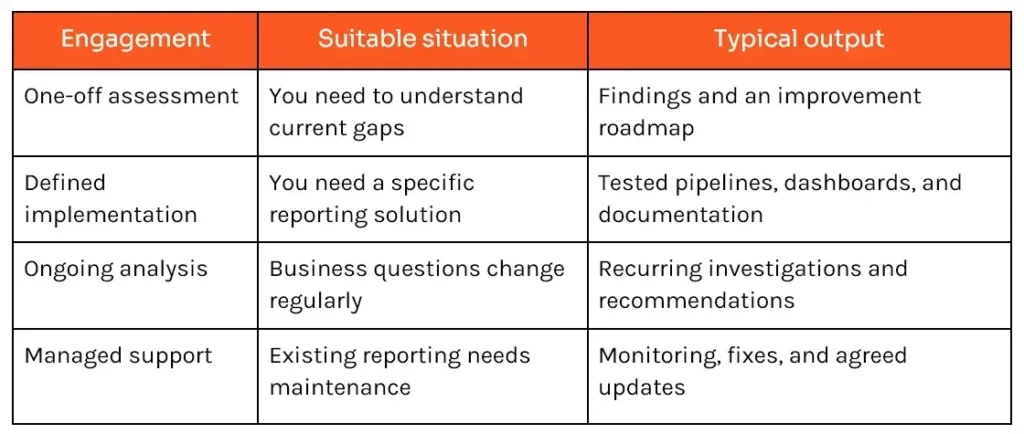
It is appropriate to carry out a profitability assessment or complete the launch of a dashboard. Continuous support will be useful when systems, products, and management queries change often.
When comparing proposals, it is important to distinguish between maintenance and analysis of the report.
No fixed average price can be stated for an engagement; two projects with the same number of dashboards can have different volumes of work.
Common arrangements include the following:
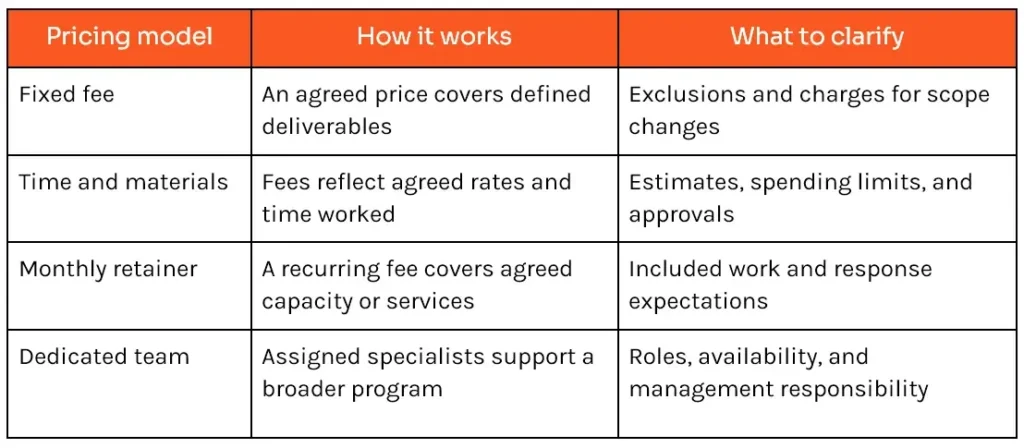
These are purchasing options, rather than a statement of NextGenSoft’s quoted rates.
The main cost drivers include:
Ask for consulting fees, software licenses, cloud usage, and support charges to be itemized separately.
A proposal should also state your responsibilities. Delayed access or unavailable business reviewers can slow delivery even when the technical team is ready.
Agree on a starting point before work begins.
Useful measures include reporting hours, reconciliation errors, information freshness, forecast accuracy, and the time taken to answer recurring questions.
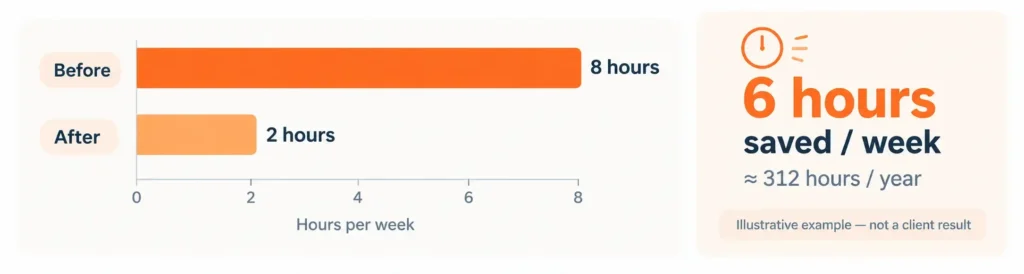
For example, imagine a weekly report takes eight hours to prepare. After implementation, it takes two hours. That is a saving of six hours per week, or approximately 312 hours across 52 weeks. This is an illustrative calculation, not a NextGenSoft client result.
Translate saved time into financial value using your own costs. Avoid counting it again under another benefit.
Forrester’s 2026 research commentary reports a correlation between stronger revenue growth and quantitative measurement of analytics ROI. It also acknowledges that causation is difficult to prove. Measurement helps assess value; it does not guarantee growth.
When comparing data analytics companies, ask for concrete answers to these six questions:
A suitable data analytics company should explain trade-offs in language your business team understands.
Our Data Science Services cover readiness assessment, data strategy, engineering, warehousing, business intelligence, predictive analytics, and ongoing model support. This breadth is relevant when reporting problems involve both the underlying information and its presentation.
Its published engagement options include project-based delivery, dedicated teams, staff augmentation, architecture support, and ad hoc assistance. The appropriate option should follow an assessment of your requirements.
When discussing data analytics consulting services, bring one reporting problem, the systems involved, and the decision you need to make.
That gives the conversation a useful starting point for defining scope, responsibilities, and budget.
The most crucial initial investment must be made with a goal to find a solution to an issue your company cannot deal with effectively. In order to begin the process, you must first identify the problem, look at the paperwork available, and figure out an outcome which will help you measure your success.
Explore our data science consulting services to learn about the problems you face in generating reports and get a proposal including scope and budget.
1. Can Small Businesses Use Data Analytics Consulting?
Answer: Definitely, the purpose of an engagement is to address a particular problem of reporting on a decision or business issue
2. Do We Need Clean Data Before Starting Data Analytics Consulting?
Answer: No, the evaluation and preparation stage will be included in the scope of work.
3. Does Data Analytics Consulting Require Replacing Existing Software?
Answer: No, the consultants can use existing systems if you provide them with access.
4. How Long Does Data Analytics Consulting Take?
Answer: It depends on system evaluation, data quality, scope of work.
5. Can Data Analytics Consulting Work Without AI?
Answer: Yes, many reporting and analysis problems can be solved without machine learning.
6. What Should We Prepare Before a Data Analytics Consulting Discussion?
Answer: Bring your main business question, current reports, system list, and known data problems.
 Prince Patel
 is a skilled software developer with hands-on experience in building reliable and efficient applications. He focuses on creating practical solutions that support business goals and drive digital progress. With a strong grasp of technology and a clear, problem-solving mindset, Prince consistently delivers clean, scalable code tailored to real-world needs.
We’re ISO/IEC 27001:2022 certified, ensuring your projects are executed with globally recognized security standards.

INDIA
 sales@nextgensoft.io
 +91 81284 66678


